
Snake Safety at Wilbinga – Be Alert, Stay Safe!
Wilbinga Conservation Park is home to a variety of native wildlife, including several species of snakes. As visitors explore the coastal heath, sand tracks and surrounding bushland, it is important to remain alert and take sensible precautions.
Snakes are an important part of our natural ecosystem. They help maintain the balance of wildlife populations and generally prefer to avoid people. Most encounters happen when a snake is accidentally approached, disturbed or surprised.
As the weather warms up, snakes become more active and may be encountered basking in the sun, moving across tracks or sheltering in vegetation.
A few simple precautions can help keep you and your family safe:
Before heading out
-
Wear suitable footwear: Enclosed shoes or boots are recommended when walking through bushland.
-
Dress appropriately: Long trousers offer additional protection when walking through long grass and scrub.
-
Stay alert: Watch where you place your feet and hands, particularly around fallen timber, rocks and dense vegetation.
-
Carry a mobile phone: Ensure it is charged and accessible in case of an emergency.
-
Keep children close: Remind children not to approach, chase or attempt to handle snakes.
-
Keep dogs under control: Dogs can easily disturb snakes. Keep pets close and avoid allowing them to investigate holes, logs or thick vegetation.
While exploring Wilbinga
-
Stay on established tracks: Avoid walking unnecessarily through long grass and dense scrub.
-
Watch where you step: Take care around logs, rocks, shaded areas and other potential hiding places.
-
Never put your hands into hollows: Check before reaching under rocks, logs or vegetation.
-
Give snakes plenty of room: If you see a snake, stop, keep your distance and allow it an opportunity to move away.
-
Never attempt to handle or relocate a snake: Leave this to appropriately qualified and authorised professionals.
-
Don't provoke or chase snakes: Taking photographs is not worth getting too close.
-
Be especially careful around campsites: Check the area visually before setting up chairs, tents or other equipment.
What if you encounter a snake?
The best thing to do is remain calm and give it space.
-
Stop and avoid approaching the snake.
-
Keep a safe distance and do not attempt to touch or move it.
-
Allow the snake to move away naturally.
-
If necessary, slowly move back and take an alternative route.
-
Keep children and pets away from the area.
Remember, snakes are protected native wildlife. Killing or harming them is unnecessary and can put you at greater risk.
What if someone is bitten?
Treat every suspected snake bite as a medical emergency, even if there is no immediate pain or obvious symptoms.
Australian snakes can deliver venom without leaving obvious signs, and symptoms may take time to develop.
-
Call Triple Zero (000) immediately and request an ambulance.
-
Keep the person as still and calm as possible.
-
Apply a firm pressure immobilisation bandage over the bite area and the entire affected limb, where possible.
-
Immobilise the affected limb with a splint.
-
Do not allow the person to walk or move around unnecessarily.
-
Do not wash the bite area, as medical staff may need to identify venom traces.
-
Do not cut, suck, rub or attempt to remove venom from the bite.
-
Do not remove the bandage until directed by medical professionals.
If you are travelling in a group, have someone meet the ambulance at the nearest accessible location and guide emergency services to the casualty.
A few additional reminders for 4WD visitors
-
Be particularly vigilant when stopping in bushland or setting up camp.
-
Check the ground around your vehicle before stepping out, especially in long grass.
-
Avoid leaving camping equipment, clothing and footwear where they may provide shelter for wildlife.
-
Keep a suitable first aid kit in your vehicle.
-
Make sure everyone travelling with you understands basic snakebite first aid.
Common and potentially encountered venamous snakes
For Wilbinga Conservation Park and the surrounding coastal bushland, the main venomous snakes visitors should be aware of are the following.
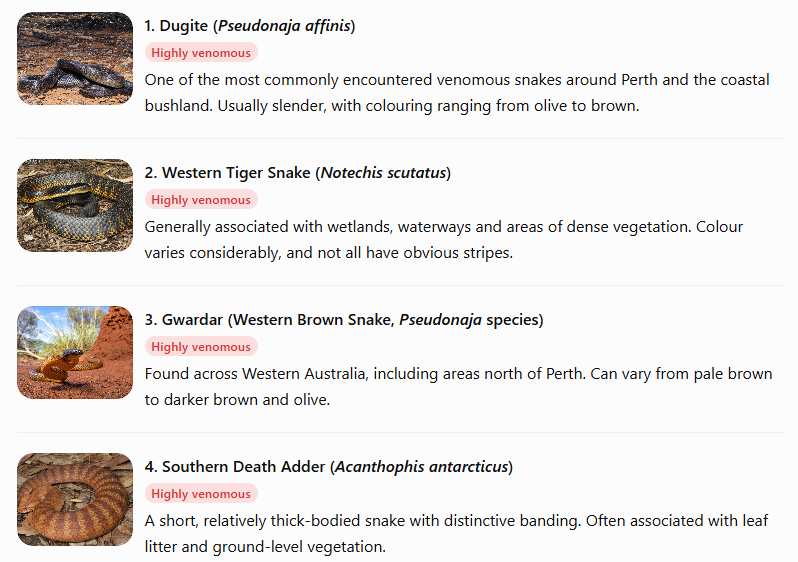
Enjoy Wilbinga, but respect its wildlife!
Snakes are part of the natural environment we all enjoy visiting. By remaining alert, giving wildlife plenty of space and knowing what to do in an emergency, we can help keep ourselves and others safe.
Let's continue to enjoy Wilbinga responsibly and ensure this wonderful natural environment remains protected for future generations.
The Wilbinga Shacks Crew – Working together to care for Wilbinga Conservation Park.